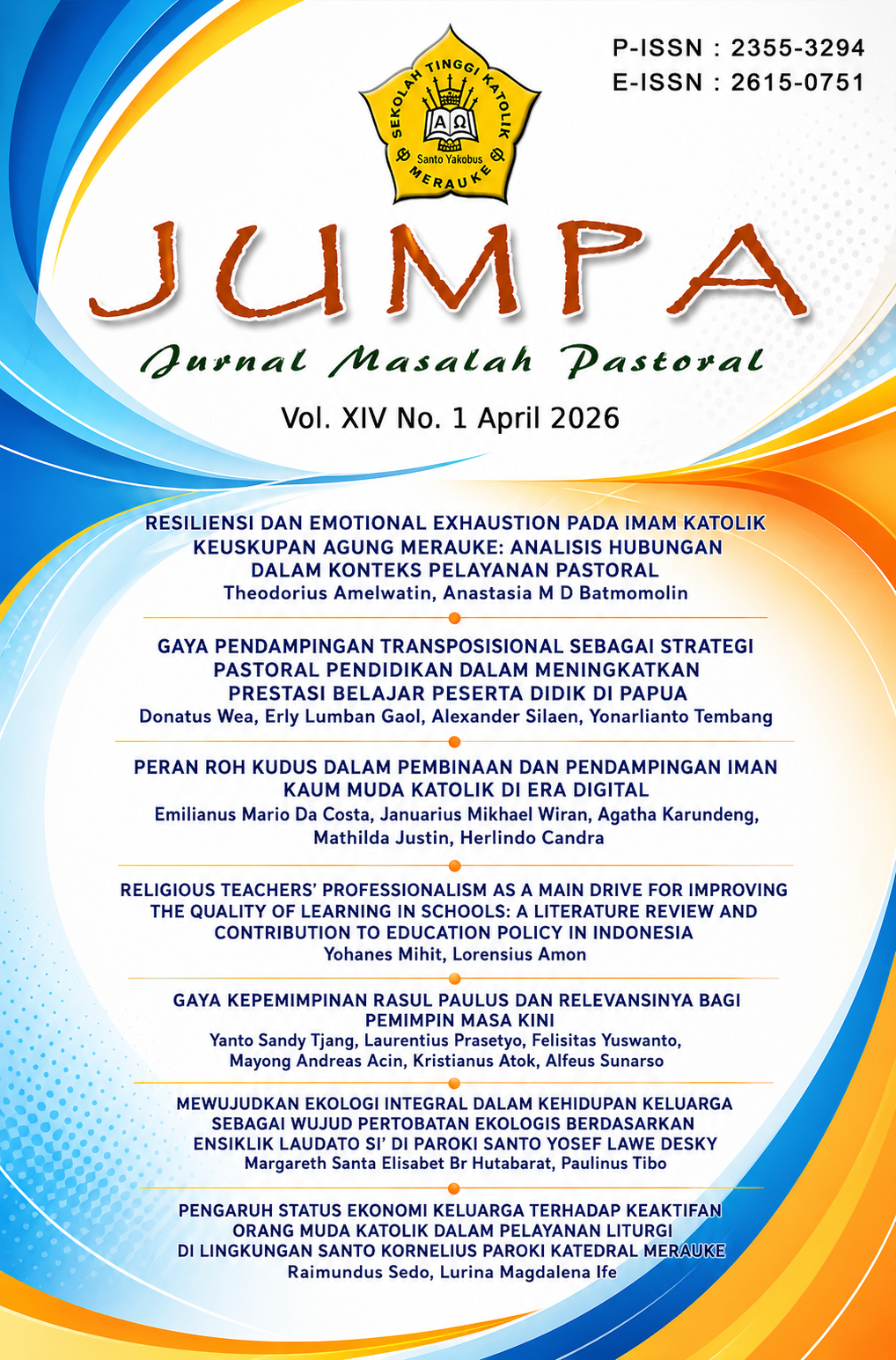
GAYA KEPEMIMPINAN RASUL PAULUS RELEVANSINYA BAGI PEMIMPIN MASA KINI
DOI:
https://doi.org/10.60011/jumpa.v14i1.255Kata Kunci:
Integritas, Kepemimpinan Kristiani, Paulus, Pelayanan, Relevansi kontemporer.Abstrak
Penelitian ini bertujuan untuk menganalisis gaya kepemimpinan Rasul Paulus serta relevansinya bagi kepemimpinan masa kini dalam menghadapi perubahan sosial, politik, ekonomi, dan teknologi yang dinamis. Krisis kepemimpinan modern—seperti rendahnya moralitas, korupsi, dan penyalahgunaan kekuasaan—menunjukkan perlunya model kepemimpinan yang berakar pada nilai spiritual dan integritas moral. Dalam konteks ini, Paulus dipandang sebagai figur teladan yang memadukan visi, spiritualitas, dan kemampuan adaptasi dalam menjalankan misi penginjilan lintas budaya. Penelitian ini menggunakan metode kualitatif deskriptif dengan pendekatan studi kepustakaan melalui analisis berbagai sumber primer dan sekunder, termasuk Kitab Suci, literatur teologis, serta hasil penelitian akademik terkait. Hasil kajian menunjukkan bahwa gaya kepemimpinan Paulus mencakup lima prinsip utama: melayani sebagai panggilan Allah, melibatkan rekan kerja, mendewasakan jemaat, mendelegasikan pelayanan sesuai karunia, serta melepas tanpa meninggalkan. Model kepemimpinan ini menekankan kolaborasi, pembinaan karakter, dan pendampingan berkelanjutan, yang tetap relevan untuk diterapkan dalam berbagai konteks kepemimpinan modern—baik religius maupun sekuler. Dengan demikian, kepemimpinan Paulus menawarkan paradigma kepemimpinan transformatif yang berakar pada kasih, integritas, dan tanggung jawab spiritual, sekaligus menjadi inspirasi bagi pemimpin masa kini untuk memimpin dengan keteladanan dan pelayanan.
Referensi
Abdulai, A. M., Iddrisu, O. A., Osman, A., & Iddrisu, A. B. (2015). Leadership integrity: A strategic pillar for ethical decision making and organizational excellence. Advances in Research, 26(1), 65–73. https://doi.org/10.9734/air/2025/v26i11233
Alkitab Deuterokanonika. (2006). Alkitab Deuterokanonika. Lembaga Alkitab Indonesia.
Avolio, B. J., & Drummey, K. C. (2023). Building leadership service academies to institutionalize a strategic leadership development focus. Journal of Leadership & Organizational Studies, 30(2), 137–154. https://doi.org/10.1177/15480518231157019
Bragger, J. D., Alonso, N. A., D’Ambrosio, K., & Williams, N. (2021). Developing leaders to serve and servants to lead. Human Resource Development Review, 20(1), 9–45. https://doi.org/10.1177/1534484320981198
Budiman, S., & Doma, Y. (2021). Implikasi latar belakang kehidupan dan pelayanan Rasul Paulus bagi pelayan Tuhan. Jurnal Teologi Injili, 1(2), 88–101. https://doi.org/10.55626/jti.v1i2.13
Foster, P. (2021). An apostle too radical for the radical perspective on Paul. The Expository Times, 133(1), 1–11. https://doi.org/10.1177/00145246211038846
Harming, H., Hu, S. A., Marlin, F., Soeprajogo, A., Kusuma, I. P. Y., Lawai, H., et al. (2025). Paulus dan pelayanan kontekstual: Misi, kepemimpinan dan relevansinya masa kini. CV Eureka Media Aksara.
Lase, A. L., & Angelina, C. (2025). Konsep kepemimpinan Paulus dan relevansinya bagi generasi Z. Jurnal Kepemimpinan Kristen dan Pemberdayaan Jemaat, 6(1), 50–62. https://doi.org/10.34307/kinaa.v6i1.188
Ridderbos, H. (2015). Paulus: Pemikiran utama teologinya. Momentum.
Schanabel, E. J. (2010). Rasul Paulus sang misionaris: Perjalanan, strategi, dan metode misi rasul Paulus. ANDI.
Schnelle, U. (2005). Apostle Paul: His life and theology. Baker Publishing Group.
Tangen, K. I. (2018). Leadership as participation in the hospitality of God: A reading of Luke–Acts. Journal of Pentecostal Theology, 27(2), 284–306. https://doi.org/10.1163/17455251-02702010
Yukl, G. (2013). Leadership in organizations (8th ed.). Pearson Education.
Zaluchu, S. E. (2020). Strategi penelitian kualitatif dan kuantitatif di dalam penelitian agama. Evangelikal: Jurnal Teologi Injili dan Pembinaan Warga Jemaat, 4(1), 28–38. https://doi.org/10.46445/ejti.v4i1.167
Zebua, B. A., Angelina, C., & Santosa, M. (2023). Keteladanan kepemimpinan Paulus dan implikasinya bagi pemimpin masa kini. Philoxenia: Jurnal Teologi dan Pendidikan Kristiani, 2(1), 11–24. https://doi.org/10.59376/philo.v2i1.19
Unduhan
Diterbitkan
Cara Mengutip
Terbitan
Bagian
Lisensi
Hak Cipta (c) 2026 Yanto Sandy Tjang, Laurentius Prasetyo, Felisitas Yuswanto, Mayong Andreas Acin, Kristianus Atok, Alfeus Sunarso

Artikel ini berlisensi Creative Commons Attribution-NonCommercial-NoDerivatives 4.0 International License.